leadership

Take Advantage of this Worksmart Sale!

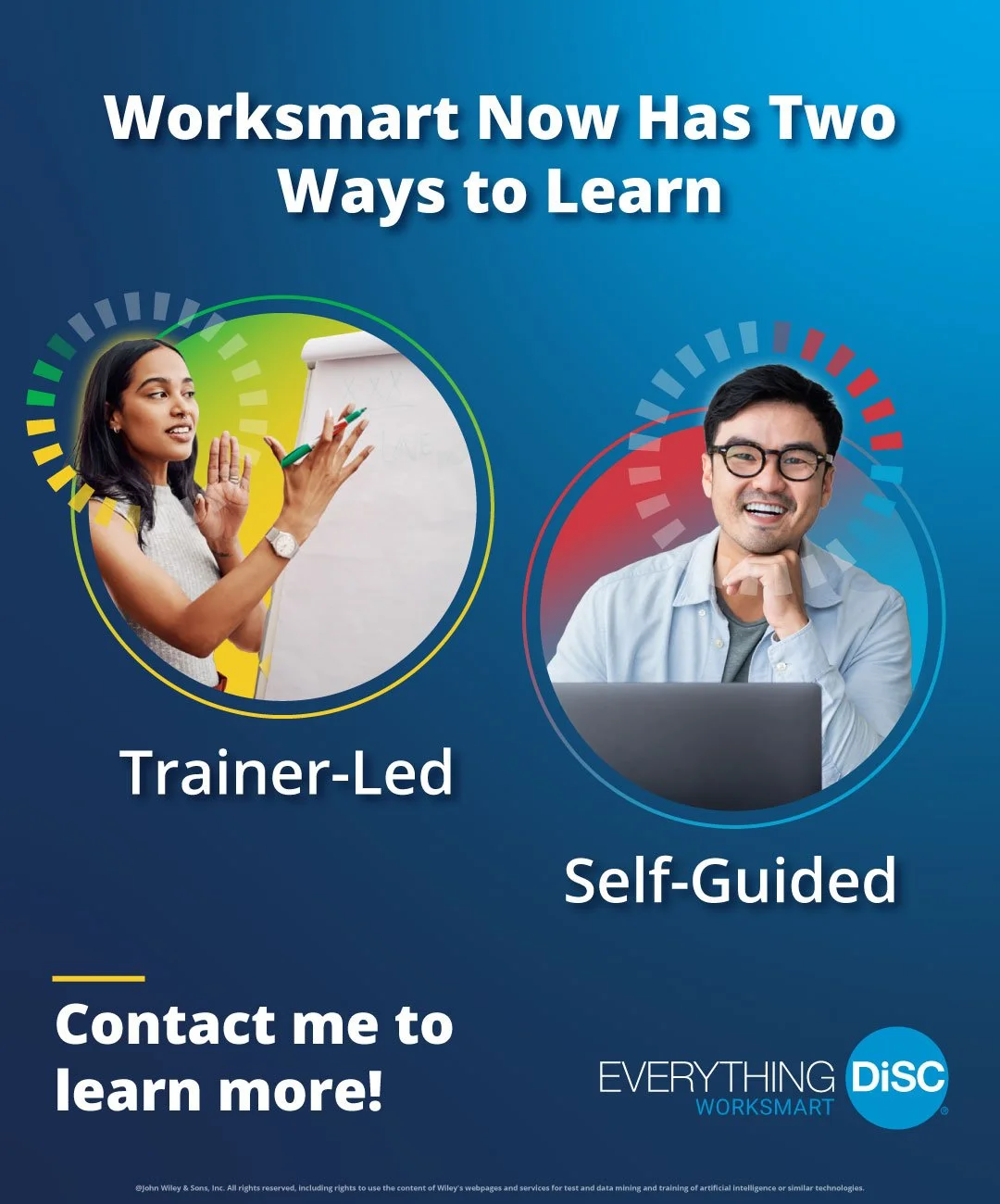
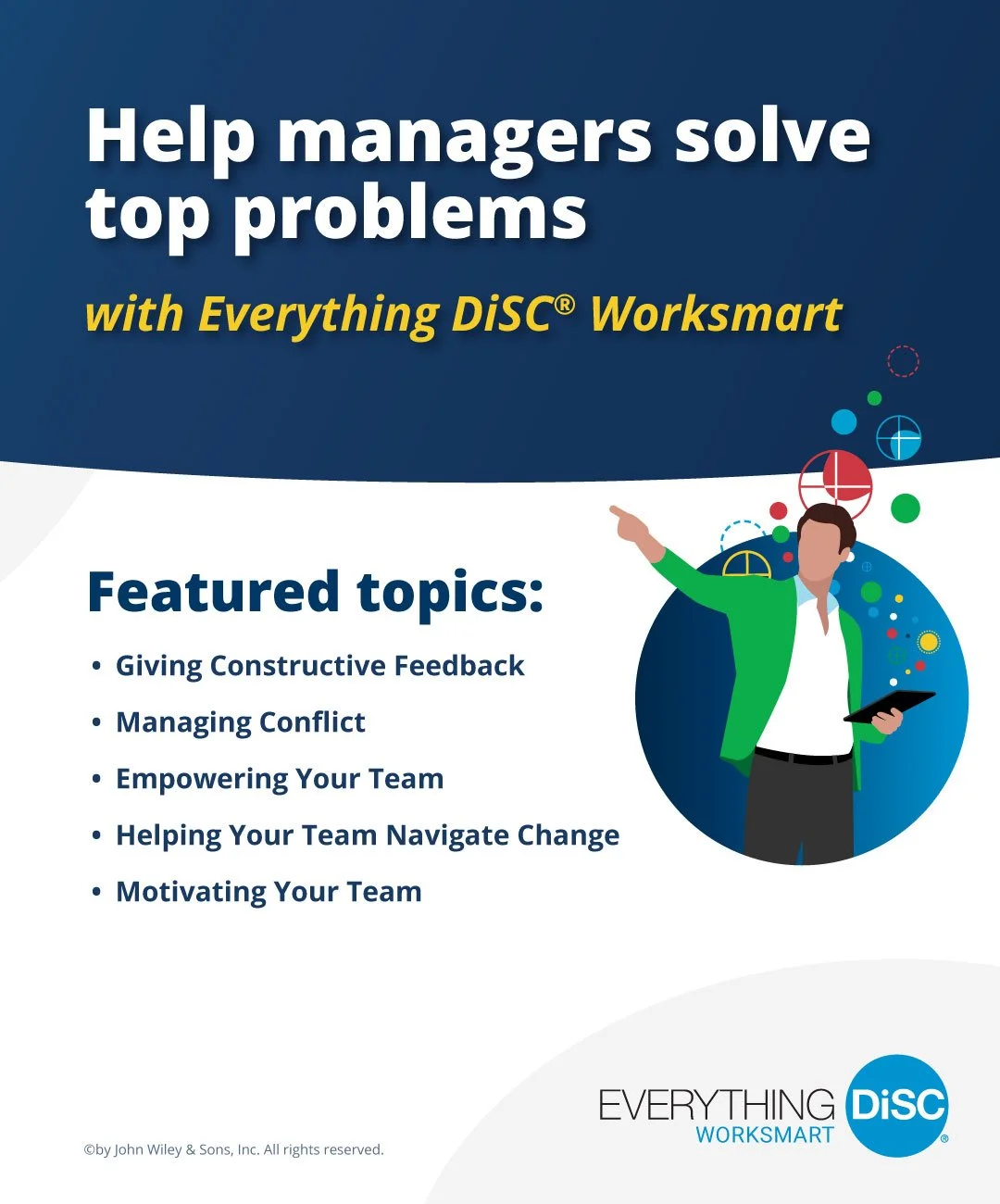
DiSCember starts early! Everything DiSC is offering 25% off Worksmart on Catalyst for a limited time only starting November 24!


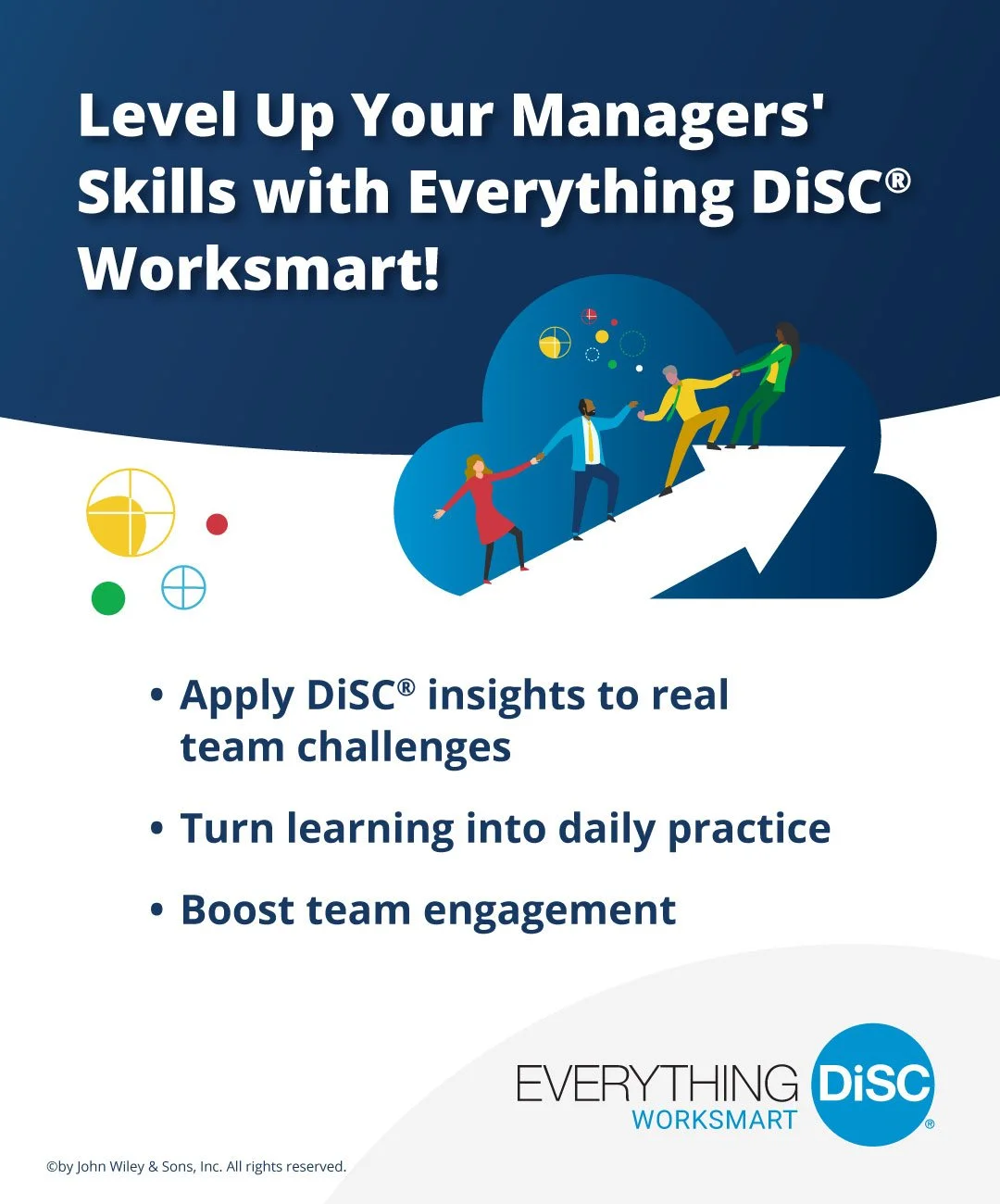
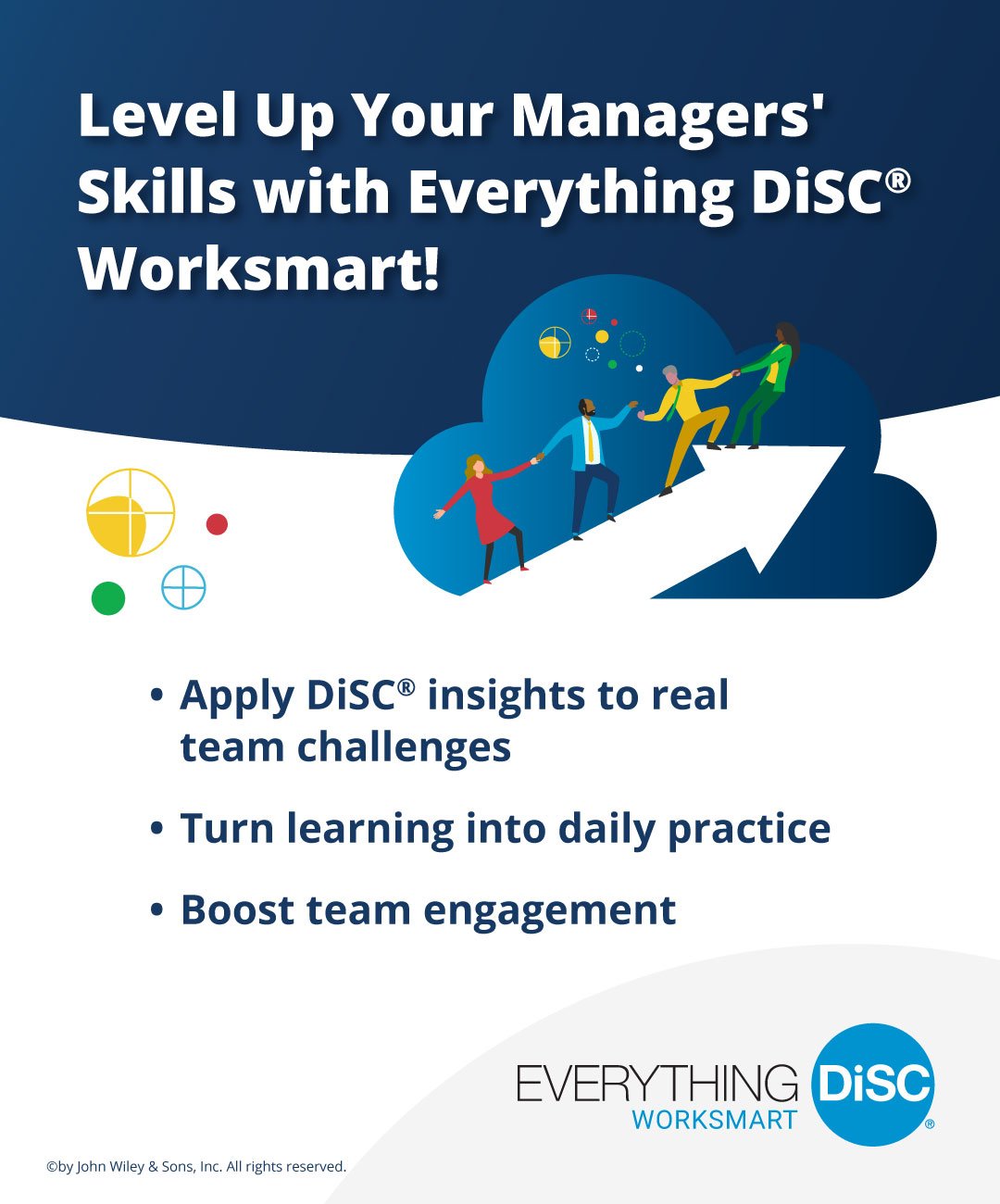
In a world where change is constant, your managers are the key to stronger teams and better performance in 2026.

Contact me to get started with Worksmart and equip your managers with the skills they need to lead!

#Worksmart #EverythingDiSC #DiSCember

DiSC and How we are Governed

A fellow DiSC consultant and deep thinker Jerome Paige (https://whatsonjeromesmind.com/about/) has applied the DiSC model to authoritarianism vs. democracy and I think it's worth us all thinking about. Here's what he says:

The Battle Within. Fascism and democracy are not just political systems; they shape how we behave, lead, and respond to power. The DiSC model offers insight into how individuals and institutions uphold democratic values or enable authoritarian control.

In America, fascism and democracy coexist, not as distant ideologies but as everyday choices. The same leadership that fuels movements for justice can also reinforce oppression. The same need for stability that sustains communities can also create passive compliance.

American Fascism and Democracy have always coexisted, shaping the nation’s identity.

The DiSC Styles in Action. Throughout history, these behavioral styles have defined key moments in American democracy and authoritarianism:

Dominance (D): Franklin D. Roosevelt’s decisive leadership during the Great Depression and World War II saved democracy, while Richard Nixon’s abuse of executive power undermined it.

Influence (i): Martin Luther King Jr. used persuasion to mobilize the Civil Rights Movement, whereas Joseph McCarthy weaponized fear to spread propaganda.

Steadiness (S): Many Americans quietly upheld Jim Crow, fearing instability, while others worked behind the scenes to sustain movements for justice.

Conscientiousness (C): The Supreme Court’s Brown v. Board of Education ruling used legal integrity to challenge segregation, while courts under Jim Crow enforced racist laws without question.

Fascism weaponizes all styles: D for authoritarian rule, i for propaganda, S for passive compliance, and C for bureaucratic enforcement. Democracy, on the other hand, requires a balance: strong but just leadership, persuasion that mobilizes rather than manipulates, stability that nurtures rather than suppresses, and integrity that upholds fairness rather than enforcing oppression.

Understanding behavioral styles isn’t just about workplace dynamics—it’s about recognizing how we contribute to either justice or oppression in all aspects of life.

Reclaiming Agency: A Meditativist Approach. Fascism thrives when individuals submit without questioning their behavioral defaults. Democracy requires a balance of all styles—boldness to resist oppression, influence to mobilize, steadiness for long-term justice, and conscientiousness for accountability.

Reflection:

Identify Your Default Style. How do you engage with power and resistance?

Investigate Your Internalized Response to Fascism. Are you resisting or complying?

Work With Opposites. How can you integrate other styles to strengthen democracy?

Democracy is not a given—it is a daily practice. Our choices in leadership, interactions, silence, or resistance determine whether we uphold or let it erode.

Make your Performance Review most effective!

What if performance reviews actually worked?

As part of the Everything DiSC Catalyst platform, in just one hour, Worksmart helps managers:

• Give feedback that sticks
• Handle conflict with empathy
• Lead meaningful review conversations

Less stress. More impact. That’s Worksmart. Learn more at an upcoming Catalyst showcase and webinar!

Check out this page for dates and to register: Resilience at Work: Using DiSC in the Face of Change — Karen Geiger & Associates, inc.

#EverythingDiSC #PerformanceReview #ManagerTraining

Use the free Everything DiSC® Comparison Report to make the most of your working relationships!

If you and a colleague have ever taken an Everything DiSC® profile, you can generate a Comparison Report at no extra cost. Each of you can use it to talk about how your working relationship is going and learn ways to adapt to each other so you make the most of it.

The Everything DiSC® Comparison Report allows any two Everything DiSC participants to see their similarities and differences in six areas. The report includes a narrative that explains these similarities and differences and guides participants in a discussion around them. Overall, the purpose of this report is to improve communication and efficiency, while reducing tension and misunderstandings.

So for the cost of 1 assessment (Workplace is $90), you can generate unlimited Comparison Reports as your working relationships change.

DM me for more info!

Use Catalyst now!

What if you had an easy-to-access online platform you could use to make the most of your relationships with your colleagues? Well it's here - Everything DiSC on Catalyst! For only $90 each, each of you can...

• Discover your DiSC style

• Deepen your understanding of yourself and others

• Learn how to build better relationships

• Access real-time tips for more effective interactions with colleagues

• Build the foundation for future social and emotional skills training

DM me for a demo today and get set up on Catalyst!!

Register for Upcoming webinars at no cost!

We are offering one-hour webinars at no charge in the next couple of months where you will learn practical ways to build your teamwork and resilience. On the top of this page, click "Learn More" and choose the session(s) that suit your interests and schedule! After each, I will be available to answer any questions you have.

Reduce critical turnover by increasing manager rapport!

In a time of high turnover, research tells us that people don't leave their organizations, they leave their managers. You can build your management strength by introducing them to Everything DiSC® Management which focuses learning in five key areas:

 -Understanding their own DiSC® styles

-Directing and delegating

-Creating a motivating environment

-Developing others with different styles

-Identifying strategies for working more effectively with managers.

Your managers will learn how their management style influences how they manage time, make decisions, approach problems, and what they need to do to adapt to the styles of others to bring out the best in each and every employee in their charge.

 DM me for a free demo!!

Leadership in Times of Uncertainty

We are in a time of uncertainty where leadership is most tested. The current global environment—marked by shifting political influences and ongoing societal tensions poses significant challenges. These dynamics leave employees searching for stability and belonging.

Farah Bala of Farsight gives us specifics about what leadership looks like now:

1. Communicating Through Uncertainty. In uncertainty, good management is about consistent communication with clarity and transparency. Acknowledging the current reality—what is known and unknown, what’s decided and what is still in discussion—is key. And, acknowledging reality does not mean solving for it. Many solutions lie beyond our control. Messaging may shift regularly, sometimes daily, and the ability to pivot at any given moment is crucial.

2. From Values To Action. Great leaders don’t just talk about values—they embody them.

3. The Power of Respect and Accountability. Respect means creating environments where all employees feel valued and supported. This requires us to model inclusive behaviors, and respond to exclusionary actions directly.

4. Sustaining Leadership Through Intention And Balance. Periods of change can take a toll on us, both mentally and emotionally. The weight of uncertainty often leads to decision fatigue and a sense of overwhelm. To lead effectively during these times, it’s important to focus on what truly matters—your team, your purpose and your capacity to sustain the work ahead. This strengthens our ability to show up consistently and intentionally. Leadership during uncertainty doesn’t mean having all the answers. It means staying adaptable, showing empathy and creating a sense of direction even when outcomes aren’t fully clear. By taking small, deliberate steps—whether through reflection, setting boundaries or leaning on our support systems—we protect not just ourselves but the energy of those we lead.

Empowerment is easier than you think!

What does empowerment really mean? Wiley Workplace Intelligence has looked at this and come up with some useful findings:

-Empowerment used to simply mean that someone had the skills, and the permission, to act autonomously at work. Often the result of long-term relationships and trust-building, empowerment developed over time.

-Today, empowerment in the workplace looks very different than it did before the pandemic. There is a surprisingly simple tool managers can use to foster it: clarity. Nearly half of employees (48%) ranked clarity as the most important factor in their sense of empowerment. This finding reveals that uncertainty, not only a lack of authority, can be a major barrier to action. Even the most capable and motivated employees may hesitate to take initiative if they’re unclear about expectations, goals, or decision-making boundaries.

-Quality of relationships outweighs tenure in fostering empowerment

-Hybrid environments have necessitated more intentional communication, which may be accelerating trust-building and strengthening relationships faster than in traditional settings.

-Remote Work Boosts Empowerment. Flexibility and autonomy, hallmarks of remote work, shape how empowered individuals feel in their roles. and feel trusted by their organizations.

-42% of employees report feeling empowered but don’t act on it. These individuals, what we call “latent leaders,” possess the mindset and potential to lead, innovate, and drive change, yet remain on the sidelines. This gap suggests that empowerment alone isn’t enough; without the right conditions and encouragement, even confident employees may hesitate to step forward.

Wiley’s suite of professional solutions provides a structure and common language to help empower entire organizations with the skills needed to get to the next level. From building better teams with The Five Behaviors® and improving understanding to create engaged, collaborative, and adaptive cultures with Everything DiSC® on Catalyst™ or helping you make confident hiring decisions with PXT Select®, Wiley has innovative solutions that help make the workplace a better place.

DM me for more specifics!!

Start your New Managers off with Success!

Are you onboarding new managers? Here's a way to start them off on the right foot to build engagement and productivity right away. Use Everything DiSC Management (on the Catalyst platform) to introduce them to the key principles of Management:

1. Your DiSC style has a strong influence on how you approach management. Other factors such as life experience, education, and maturity also play a role,

2. People with all styles can be effective managers, even if they approach the role differently. No style is better than any other,

3. No matter what your style, you’ll need to adapt to the styles of the people you manage if you want to be effective.

Then they can apply their personalized style to 4 key roles a manager must play: directing/delegating, motivating, developing talent and managing up.

And when review time comes, you can offer the Delivering Constructive Feedback module to those managers so they can apply their approach to a specific direct report.

This is a way you can integrate training and development with the work of your managers to build a strong and effective culture.

DM me for more info or a demo.

Come to the Why Feedback Fails: Guiding Managers Through Constructive Communication webinar!

Come to the Why Feedback Fails: Guiding Managers Through Constructive Communication webinar on either June 12 or July 22 at 11-noon ET (you will get a recording if you register and can't make that time). You will learn how DiSC® styles—both manager's and direct report's—impact feedback dynamics. You will gain practical tools to help managers adjust their style for different team members, so they can overcome barriers and build positive interactions.

Giving constructive feedback is one of the 5 topics in Everything DiSC’s latest innovation – Worksmart. This tool helps managers tackle workplace challenges with short, facilitated trainings. In this 60-minute webinar, you will learn:

·       The importance of delivering feedback effectively

·       Why giving and receiving feedback often presents challenges

·       Feedback superpowers and limiters unique to each DiSC style

·       How to tailor feedback delivery to match direct reports’ DiSC styles

·       Actionable strategies to implement these personalized insights immediately

Get a sneak peek by watching this preview video: https://players.brightcove.net/3742124946001/jHepbYsjj_default/index.html?videoId=6370145775112

Let me know if you're interested and I will register you today!

Give managers what they need to build engagement and productivity!

If you are in the training field and realizing that targeting content to specific real-time challenges is the best way to train now, you have a great option.

Everything DiSC® Worksmart is a set of five targeted learning modules designed to help managers apply DiSC® to everyday interpersonal challenges.

Worksmart combines DiSC insights, short-form facilitated training, and on-demand action planning, ensuring managers can immediately apply DiSC to a range of interpersonal situations. This will help managers develop and put into practice the concrete skills that are demanded of them every day.

Two of the five modules will be released TOMORROW (May 5, 2025) for the exclusive reduced price of ten credits (50% off the regular price). If you want this reduced price, all of your learners will receive two modules right away, then get the remaining three modules as they become available through late summer—for no additional fee! This offer will end on July 31, 2025, when Worksmart officially launches.

Contact me at karen@karengeiger.com for more information or details!

Make your Feedback Effective

Facing challenges in delivering constructive feedback as a manager? Join Dr. Mark Scullard’s webinar, Why Feedback Fails: Guiding Managers Through Constructive Communication, on May 5, 11-noon EST. to:

·       Discover the importance of delivering feedback effectively

·       Unpack why giving and receiving feedback can be a challenge

·       Learn feedback superpowers and limiters of each DiSC style

Just let me know you want to attend and I'll sign you up. This is worth your time!

Make your Leadership Development efforts successful!

According to McKinsey, our organizations make 4 common mistakes when they set out to develop leaders. Here are ways to avoid those and make your efforts succeed.

1. Before planning a leadership initiative, ask yourselves "what, precisely is this program for?". That answer will help you identify a small number of competencies that will make a significant difference to your performance.

2. Tie leadership development to real on-the-job projects that have a buseinss impact and improve learning. Don't just provide the benefit of going off-site and reflecting.

3. Identify the mindsets of your leaders that drive their behavior which will be uncomfortable but will make learning last. For example, promoting delegation and empowerment is good in theory, but will not last if participants have a "controlling" mindset. That mindset needs to be surfaced and replaced with something that will cause lasting change.

4. Measure the results of leadership initiatives beyond participant feedback. Track and measure changes in leadership performance over time, for example through a 360-degree feedback process at the beginning of the program followed by another one after 6-12 months. This can be modelled by the CEO who can go through this process and publish results (good and bad) for everyone to see.

Respond to market trends successfully!

Wiley Workplace Intelligence regularly examines market forces shaping our shared future, and their November 2024 report reveals these shifts:

1. The Reality of Workplace Change. Change has become a constant in today’s workplace, but successfully navigating it is far from straightforward. According to Accenture, 70% of transformation efforts fail, largely because employees aren’t fully engaged in the process. 96% of employees report feeling stressed about change, and for 69%, unclear communication intensifies that stress.

2. Why Employee Engagement Matters. Engagement has always been a key driver of performance, but its significance is now amplified. When employees feel connected to their work and organization, they are 18% more productive, according to Gallup. Conversely, disengagement costs the U.S. economy $1.9 trillion in lost productivity each year. As the C-suite prioritizes engagement-driving efforts, they are recognizing key drivers such as a connection to company purpose, professional development, and enabling high-quality workplace relationships—particularly the relationship between an employee and their manager.

3. Learning and Development: A Strategic Function in the Workplace. L&D is rising in strategic importance within organizations surveyed. 60% of L&D professionals surveyed agree that their function has a new and durable seat at the decision-making table. Another change within the global Learning and Development practice is the evolution and expansion of training modalities, driven by a recognition that today’s employees require personalized, continuous, and solution-oriented learning that is integrated directly into their workflow.

4. The Growing Reliance on People Managers to Drive Professional Development As L&D’s influence grows, so does its reliance on people managers to bridge the gap between learning and real-world application. Managers play a vital role in encouraging participation in learning and providing feedback on performance. Yet many managers lack the training needed to fulfill these responsibilities. 49% of managers report severe stress levels, and nearly 60% of employees surveyed agree that their manager would benefit from additional training with a shocking 67% reporting that they’ve either quit or considered quitting their job due to poor management.

All of these trends point to the Everything DiSC suite of profiles as a valuable tool to increase engagement, link management behaviors to strategic priorities, and make change smoother. DM me for a demo!

L & D Takes a Seat at the Strategy Table

In McKinsey’s “The Essential Components of a Successful L&D Strategy” (2019), they observe that over the past decade, the global workforce has been continually evolving because of a number of factors:

* An increasingly competitive business landscape,

* rising complexity, and

* the digital revolution.

Meanwhile, persistent uncertainty, a multigenerational workforce, and a shorter shelf life for knowledge have placed a premium on reskilling and upskilling. The shift to a digital, knowledge-based economy means that a vibrant workforce is more important than ever and research suggests that a very significant percentage of market capitalization in public companies is based on intangible assets—skilled employees, exceptional leaders, and knowledge.

These factors have elevated the importance of the Learning-and-Development function in organizations and have placed them at the strategy table so that organizational strategy is linked to how the people will carry it out.

If your team is certified in using the Everything DiSC Suite of profiles and related facilitation tools, you will gain credibility and be able to make this link seamlessly. If you have 5+ people to be certified, DM me to set up a certification series over 2 weeks at your convenience (4 live online sessions and some online prework) and if you have fewer than that, click here for dates I can get you registered for Wiley’s certification: https://lnkd.in/gnF24RKu. Same content either way.

Counteract social media by building authentic relationships

Social media, while supposedly intending connection between, can increase feelings of loneliness (Needle, 2024, https://lnkd.in/e_RffUFm) and block interaction if only used passively. We can build more authentic connectivity by using tools designed for that and causing people to reflect on their own thoughts and reactions as well as respond to others' thoughts and reactions, so we build meaningful community.

If we leave our connectivity to social media's openness to disinformation and shared opinions without responses, we are at risk of destroying rather than building community.

I challenge you to choose someone you work with who you only see on social media, ask them if they are willing to do this, then dm me and each of you take an Everything DiSC Workplace profile then discuss the prompted questions to build a relationships away from social media.

Develop your organization's leadership capacity by using Everything DiSC Work of Leaders®

This program, profile and facilitation guide lays out a clear path for helping leaders at all levels make the connection between their DiSC® style and leadership. With one unified model of leadership—vision, alignment, and execution—it focuses on helping leaders understand their own leadership styles and how their tendencies influence their effectiveness in specific leadership situations.

Participants Take-Aways

*Recognize the priorities and tendencies, based on their own DiSC style, that shape their approach to the fundamental work of leaders: creating a vision, building alignment around that vision, and championing execution of the vision

*Explore in detail how to play to their strengths and overcome challenges to improve their leadership effectiveness

*Identify strategies to develop preferred behaviors based on context-specific best practices 

Program Components

1. Everything DiSC Work of Leaders® Profile.  

*Research-validated, online assessment. 23-page leader-specific profile report provides detailed context-specific feedback based on the three-step Vision, Alignment, and Execution Model and the three drivers associated with each step. Strong visuals and illustrations, including 18 behavioral continua, delve deep into what steps leaders can take to increase the behaviors linked to the essential best practices of leadership.

*Easily customizable. Remove or rearrange pages, customize the profile title, or print selected sections. The profile may be used on its own or with the companion facilitation (sold separately).

2. Facilitation Toolkit 

*Five 60-90-minute modules, including fully-scripted facilitation dialogue to use with experiential learning activities and thought-provoking group discussions.

*Easily customizable. Create an end-to-end leadership development program or concentrate on specific areas. Switch out video clips. Modify the PowerPoint presentation, Leader’s Guide, and handouts. Add or delete sections to fit any timeframe.

*Engaging 17 video segments of contemporary leadership examples. Use as stand-alone clips or integrate with the facilitation PowerPoint or your custom PowerPoint presentation.

*36 dynamic podcast segments specific to one of the three components of the Work of Leaders model—vision, alignment, and execution. Learn first-hand how to interpret Work of Leaders continua to answer participant questions. Insightful information not available anywhere else.

DM me for more info or a demo profile!

Build individual and organizational capacity to make the most of teamwork in your organization

Get certified to create a lasting impact on your team members’ and organizational performance by adding The Five Behaviors® Certification to your portfolio!

In this two-week course combining live, instructor-led sessions with self-guided online learning, you will build your confidence and expertise in delivering impactful Five Behaviors® learning experiences that help build a culture of teamwork. Upon successful completion of the course work (including a score of 80% or above on the final Certification exam), you will earn the credential of The Five Behaviors Certified Practitioner— signaling proven competence in shaping engaged, cohesive, and high-performing teams—and knowledgeable in the language of The Five Behaviors.

Let me know you’re interested and find upcoming dates here: https://www.karengeiger.com/the-five-behaviors-facilitator-certificationkg.

Build meaningful conversations in your organization

Gallup's 2024 Employee Engagement Checklist includes this: Prepare managers to have meaningful conversations with their employees.

It goes on to define 5 characteristics of a meaningful conversation:

1) Recognition or appreciation for recent work.

2) Collaboration and relationships.

3) Current goals and priorities at work.

4) The length of the conversation: Between 15 and 30 minutes is enough time for a meaningful conversation, but only if it happens frequently.

5) Employee strengths or the things they do well: Managers can have much more meaningful discussions about how each person gets their work done if those conversations are based on what they do best. The takeaway is that feedback is meaningful to employees when their manager focuses on recognition, collaboration, goals and priorities, and strengths. And if these conversations happen every week, they can be brief. Naturally, problems and challenges will arise — and managers and employees should discuss them — but to improve engagement, managers must have conversations that inspire each individual.


As you have these meaningful conversations, taking communication preferences into account will make these successful and Wiley's Everything DiSC portfolio provides data to help each person adapt to the other's preferences. DM me for more information.